

From Cowboy Dreams to Scripture: What the Four Directions Reveal About God, Chaos, and Human Nature
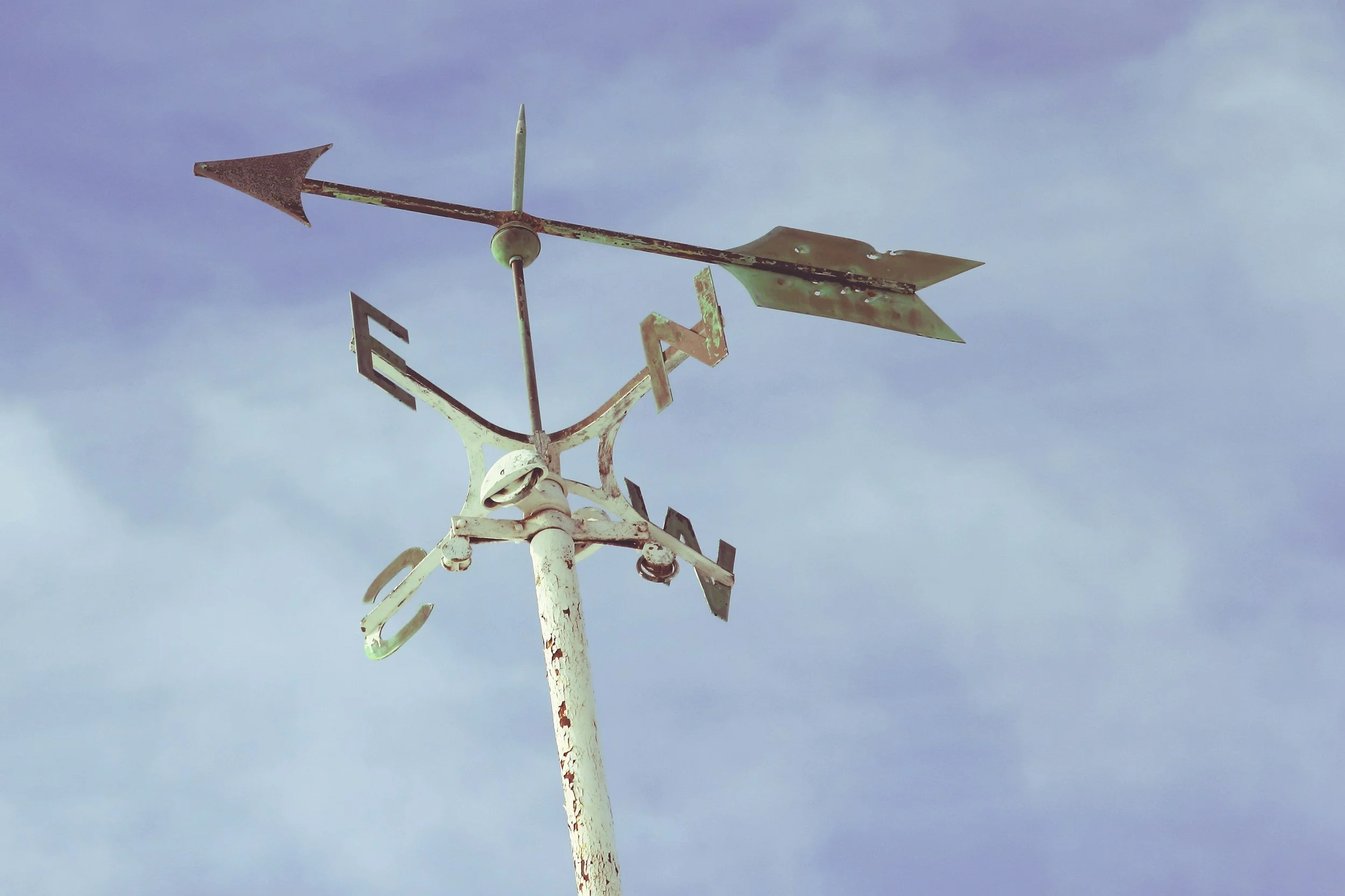
A picture representing all the directions: North, East, South, West
Growing up in the Midwest — and maybe everywhere else — the West was the ticket. The Wild Wild West, west coast music, songs that always talked about the West, movies that always glorified it, western culture everywhere you looked. But what if I told you that the West is the way of the devil?
When I was a kid, all I knew was the West. Growing up in a very small town — some would consider it the country — I wanted to be a cowboy and gunslinger like the greats, like Wild Bill. Eventually, I had to grow up, and I found my love for hip-hop, especially the West Coast sound, the West Coast funk, the West Coast whistle. Thinking about it now, maybe my parents were right not to like that kind of music and culture. It led to a sense of empowerment, a sense of rebellion, a sense that you just don't care anymore. It was freeing — but freedom without direction is just another word for lost.
A Disclaimer Before We Begin
I want to take a moment to offer a disclaimer. What you are about to read draws from biblical text and the Dead Sea Scrolls. Some cultures — especially Western culture — do not fully accept the Dead Sea Scrolls beyond the books of Isaiah and Psalms. As I see it, if the book of Isaiah is found to be 95–99% identical to its canonical form, and 36–40 Psalms were discovered there as well, then the other books found among the Dead Sea Scrolls deserve serious consideration. Even if they were written in the Second Temple era, a strong theological standpoint has already been established — why stop there?
The Foundation: Noah's Sons and the Four Directions
Before we dive in, I want to give you some background. While reading the Bible and the Book of Jubilees, I came across the account of what land Noah's sons received after the flood. For those who don't know: Shem received the East, Japheth received the North, and Ham received the South. Now, I've been saying the West is troubled — but here's the question: who received the West? And what did it mean biblically? What if the four directions weren't just geography, but a map of human nature and its relationship to God?
The West — The Direction of Chaos

A picture of the Mediterranean Sea
No one really inherited the West. Why? If you look at a map of where Jerusalem sits — where the events of the Old Testament take place — you realize there is a sea in the way: specifically, the Mediterranean Sea. In ancient Eastern thought, the sea was not a peaceful body of water. It was the embodiment of chaos, the untamed, the dangerous, the anti-creational.
Psalm 74 and Job 38 both reference God's act of setting a boundary (chok) for the sea — a line it cannot cross: "Thus far and no further." The sea strains against its boundaries. It is only God's ongoing authority that keeps it in check. The West, where the sun dies each evening into the waters, is where order ends, and darkness begins. In Revelation 21:1, we are told the sea is no more — meaning the elimination of chaos, disorder, and the threat that the western waters represented throughout all of Scripture.
People also associate the West with spiritual decline, compromise, and movement away from God. The Mediterranean coastlands — the "isles of the sea" in Hebrew — are associated with Gentile nations. The Philistines lived to Israel's west. Rome, the great oppressor of New Testament times, lies to the west. The "Babylon" of Revelation is widely understood to be a Western power. And when Jonah flees from God, he goes to Joppa on the Mediterranean coast — heading west toward Tarshish, the exact opposite direction from his God-given mission to Nineveh, which lay to the northeast.
The pattern is hard to ignore: the West is where people go when they are running from God.
The North — The Direction of Judgment
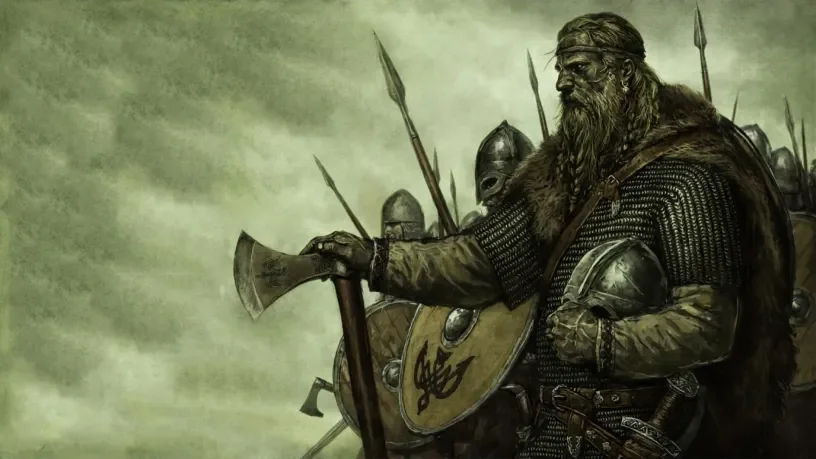
A picture of Vikings (From the seeds of Japheth)
In the Bible and the Book of Jubilees, Japheth receives the North — cold, distant, outer territories: the steppes and coasts north of the Black and Caspian Seas, Asia Minor, Greece, and the far north. Genesis 10 states that Japheth's son Gomer fathered the peoples of the far north. Later rabbinic and medieval tradition consistently identifies his descendant Ashkenaz with the Germanic and Norse peoples. Ezekiel 38–39 famously places "Gog, of the land of Magog, the prince of Meshech and Tubal" in the uttermost north — a place associated in the prophetic imagination with darkness, coldness, and end-times threat.
The prophets are overwhelmingly consistent: catastrophe comes from the north. "Out of the north disaster shall be let loose upon all the inhabitants of the land" (Jeremiah 1:14). Assyria and Babylon both invaded from the north, traveling down around the Fertile Crescent. The "king of the north" in Daniel is a figure of oppression. Isaiah 14:13 records Satan's own boast about ascending to "the sides of the north" — the north becomes the seat of demonic presumption. When the ten northern tribes are exiled, they go north and east into Assyrian territory, effectively disappearing from the biblical narrative.
The South — The Direction of Testing
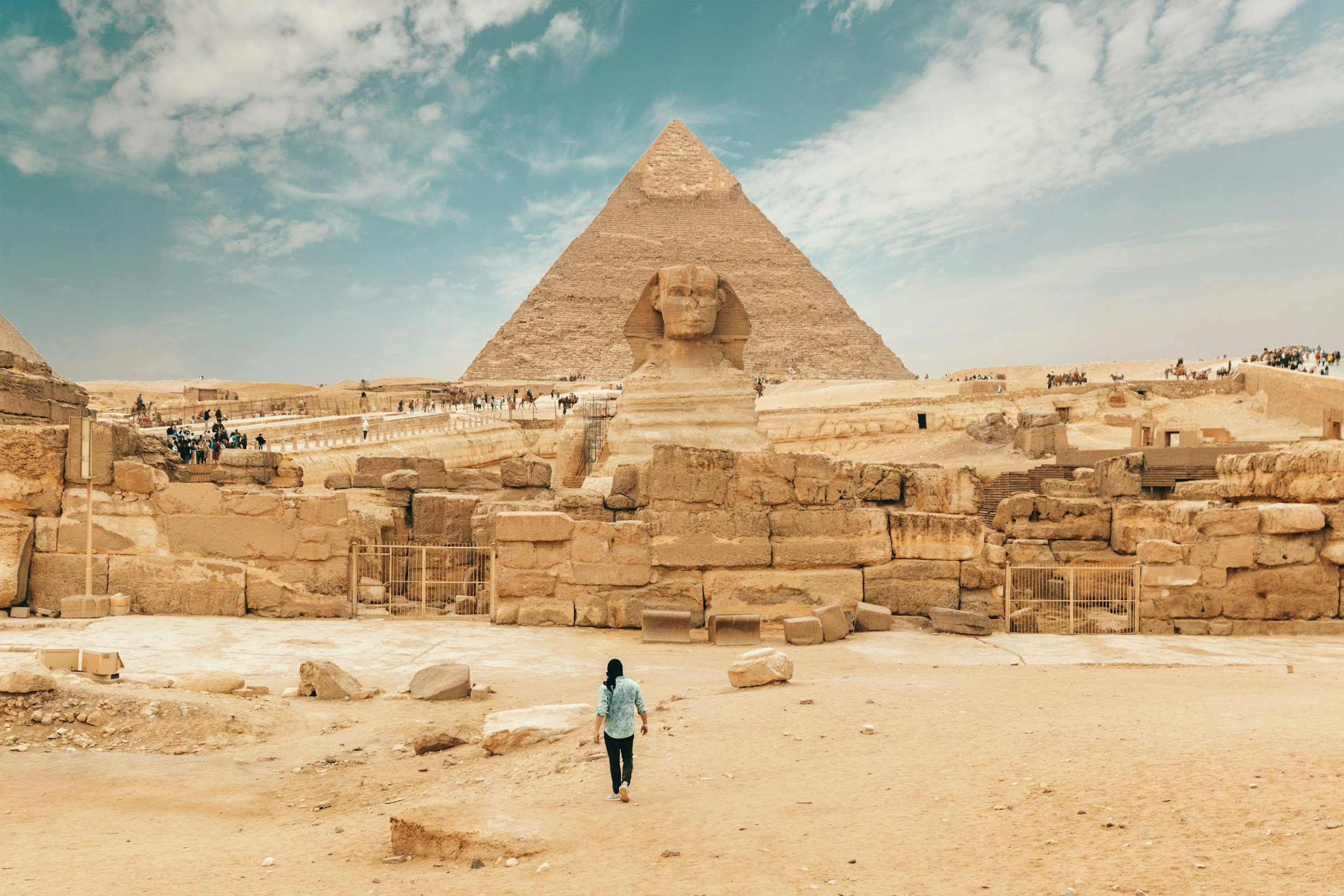
A picture of an Egyptian Pyramid
Ham's portion — which includes Egypt, Canaan, Ethiopia, and Africa broadly — lies to the south. Ham's son Canaan becomes cursed (Genesis 9:25), and his descendant Mizraim becomes Egypt. Ham's territory is associated with bondage, idolatry, and Egypt's repeated role as Israel's oppressor.
The Israelites' forty years in the wilderness were geographically southern — the Sinai and Negev. Egypt is to the south and west. And going to Egypt, throughout Scripture, consistently means compromising with worldly power: Abraham goes to Egypt during a famine and nearly loses Sarah (Genesis 12); Jacob's sons go to Egypt, and eventually the entire nation ends up in bondage. The prophets repeatedly warn against "going down to Egypt for help" (Isaiah 31:1). Hagar and Ishmael wandered southward after being cast out. The south is the direction of testing and temptation — rarely of divine favor, but not always of outright judgment either. It is the direction of survival without God's blessing fully intact.
A Notable Exception: Cain Goes East
Before we get to the East, one important exception deserves acknowledgment. After killing Abel, Cain "went away from the presence of the Lord and settled in the land of Nod, east of Eden" (Genesis 4:16). This seems to cut against the idea of East as the favored direction — but scholars of the Hebrew text note something important: Cain goes east of Eden, meaning he is moving further out from an already-exiled position. He is not moving toward God's throne; he is fleeing even further from the ruined paradise. The sin preceded the movement. The East here is the direction of the already-cursed earth.
This actually reinforces the deeper logic: East relative to Eden is the direction of exile because Eden itself already represented the eastward threshold between God and man. The sacred East is defined by orientation toward the divine presence, not simply by a compass bearing.
The East — The Direction of God
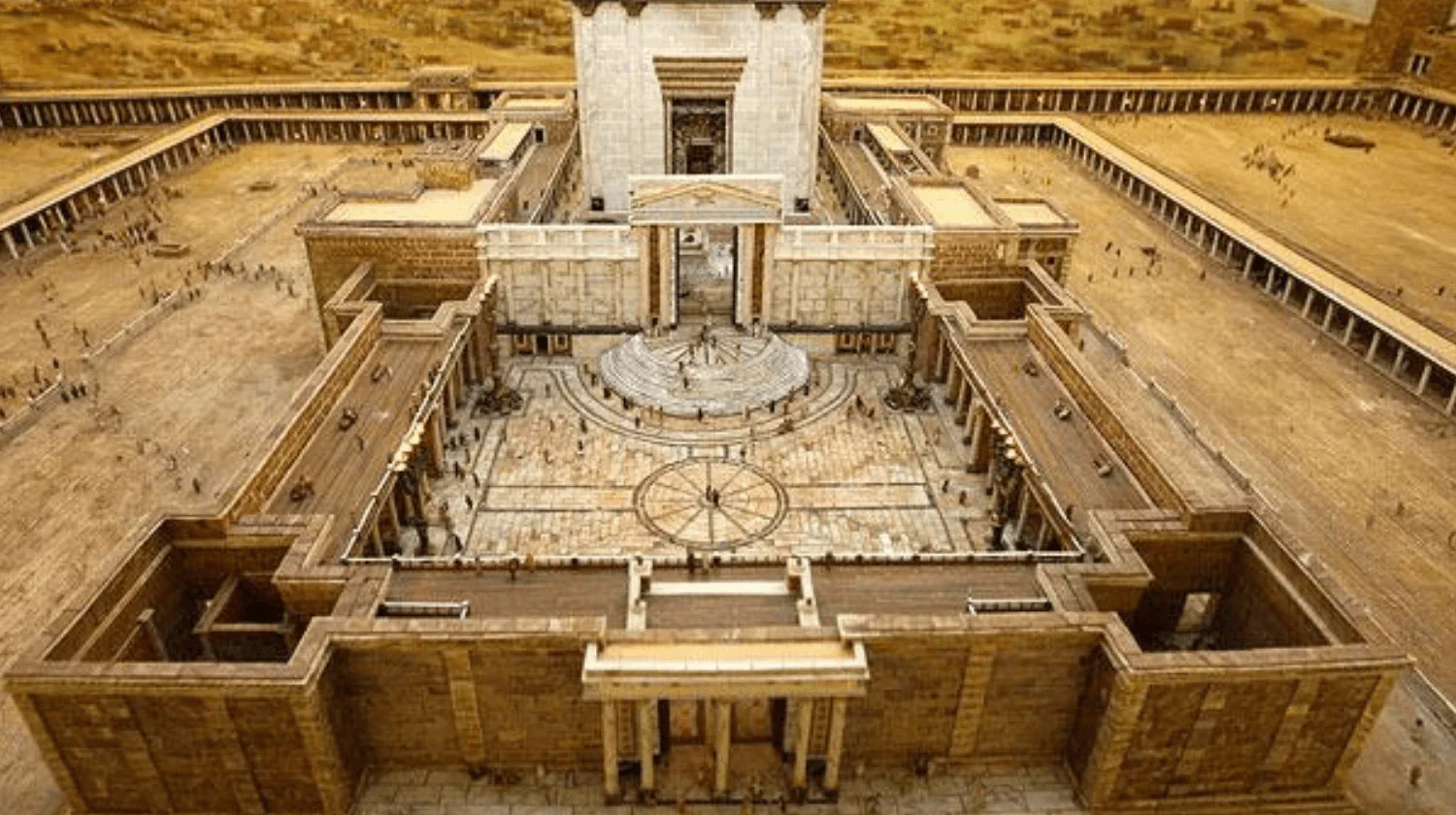
Solomon’s Temple faced East
The case for East as the divinely preferred direction is overwhelming and consistent across both canonical Scripture and the Dead Sea Scrolls tradition.
Eden's gate faces East. Genesis 3:24 places the cherubim and the flaming sword at the eastern entrance to the Garden. This is not incidental — it establishes East as the threshold between God's presence and the fallen world. Paradise lies to the East; exile moves you away from it.
The Tabernacle and Temple face East. Every sanctuary in Israel — the Tabernacle in the wilderness, Solomon's Temple, Ezekiel's visionary Temple — is oriented so that worshippers enter from the east and move westward toward the Holy of Holies. The priests stood facing east at dawn to offer the morning sacrifice. The entire architecture of worship is a journey back toward the East, toward light.
God's glory moves eastward. In Ezekiel 10–11, the Shekinah glory of God departs the Temple heading east, over the Mount of Olives. In Ezekiel 43, the glory returns — from the east. The direction of God's presence is emphatically eastward.
The Magi came from the East (Matthew 2:1). The men who recognized and sought the newborn Christ were eastern stargazers — widely understood in early Christian tradition to come from Persia or Babylon, the heartland of Shem's inheritance. The wise men of the East found what the entire Western world had missed.
The sunrise as a theological symbol. The Hebrew word mizrach (East) literally means "the place of the rising sun." Malachi 4:2 calls the Messiah "the sun of righteousness rising with healing in his wings." The daily resurrection of the sun in the East becomes a standing metaphor for divine renewal and resurrection itself.
Shem received the East — specifically the lands east of the Euphrates, encompassing Persia, India, and the territories that would become the heartlands of the Semitic and later Israelite peoples. Jubilees explicitly states that Shem's portion is "the middle of the earth" and the most blessed territory. He received the land where Eden was located and where the future Jerusalem would stand. Shem is Noah's most favored son — the line through which the covenant and the Messianic promise run. Abraham, Isaac, Jacob, Moses, David, and ultimately Jesus are all descendants of Shem.
Closing: Which Direction Are You Facing?
I started this piece talking about growing up drawn to the West — the cowboys, the coast, the culture. And honestly, it felt good. It felt like freedom. But freedom toward what? When I look back now, I see that the West was always pulling me away from something rather than toward it.
Maybe I am reading too much into this. Maybe the direction you travel — in your heart, in your life, in your choices — doesn't matter. But I believe it does. Every day, you are moving in some direction spiritually. The question is whether you are moving like Jonah — heading west, away from the call — or like the Magi, traveling east, following the light until you find what you were always meant to find.
Honestly, what direction are you headed? I just hope this has opened your eyes to question where you stand with God, and to correct your way.
