

We Have No Business Explaining History's Most Famous Gangsta By 2 Unqualified Guys
A closer look at what the word "gangster" actually means — and why the man from Nazareth might be the truest example of it.
Say the word "gangster" and most people picture the same thing: the streets, the crew, the silence when it counts, the respect nobody dares question. It's a word wrapped in slang and stereotype long before it's examined for what it actually means underneath.
Strip away the imagery, though, and the definition changes. Unbreakable loyalty. Radical respect. Accountability. Composure under pressure. Living by a code even when the entire system stands against you.
By that definition — not the Hollywood one, the real one — Jesus wasn't just a moral teacher or a miracle worker. He was the blueprint.
This isn't a claim that Jesus was a criminal, or violent, or lawless. He said it himself: "I have not come to abolish the Law or the Prophets, but to fulfill them" (Matthew 5:17). What he rejected wasn't God's law — it was the corrupt gatekeeping and hollow performance of righteousness that the religious establishment had built on top of it. He answered to a higher authority than the one the system tried to impose on him. That's the whole thesis: an outsider to the world's systems, never an outsider to God's will.

Started From The Bottom- Drake
He Started With Nothing and Never Chased the Top
Jesus came out of Nazareth — a town with so little status that even one of his future disciples asked, "Can anything good come from Nazareth?" (John 1:46). He wasn't part of the establishment. Not a Pharisee, not a Roman official, not wealthy, not ruling class — even though he descended from the royal line of David.
He didn't climb the ladder, and he didn't chase approval from people at the top. Instead, he walked straight toward the people everyone else had already written off: tax collectors, lepers, Samaritans, the poor. "Those who are well have no need of a physician, but those who are sick" (Matthew 9:12). He wasn't angling for a seat at the establishment's table. He was building something the establishment couldn't touch.
Zacchaeus is the clearest picture of this. Back then, once society labeled you — thief, tax collector, outcast — that label became your identity. Nobody used your real name anymore. Then Jesus walks up and calls him by name. It's a small moment, but it says everything: he saw people the world had stopped seeing.

Hustlin’- RICK ROSS
Hustle: Relentless Pursuit, Not Hype
Before loyalty. Before respect. There's hustle.
Real hustle isn't hype — it's the relentless pursuit of a mission, day after day, whether anyone's watching or not. Jesus was baptized around age 30 and had roughly three to five years of active ministry — plus 40 days in the wilderness resisting temptation before any of it began. Those final years were the most impactful stretch of his life, built on three decades of quiet foundation.
"We must work the works of him who sent me while it is day" (John 9:4). He knew exactly what his mission was, and he worked it without letting up.
The parable of the lost sheep captures the mentality perfectly: a shepherd with 99 sheep safely in the fold leaves all of them to go chase down the one that wandered off (Luke 15:4). Jesus didn't write people off because they were lost or broken. He pursued the mission instead of waiting for it to come to him. That's hustle.

Loyalty- Kendrick Lamar
Loyalty and Respect: Earned, Never Demanded
Real loyalty isn't tested when things are easy. It's tested when someone betrays you — and you still don't walk away.
Jesus knew Judas would betray him. He washed his feet at the Last Supper anyway. He called him "friend" in the garden, in the exact moment of the betrayal (Matthew 26:50). That's not weakness — that's a man refusing to let someone else's actions decide who he is.
Compare the two endings: Judas, consumed by guilt, takes his own life. Peter, who denied even knowing Jesus three times while Jesus was on trial feet away, is restored after the resurrection — not lectured, just asked three times, "Do you love me?" Once for every denial (John 21:15–17). Then handed the keys to build the church. That's the difference between guilt that destroys and grace that rebuilds.
Respect worked the same way. Jesus never demanded it through fear — he earned it through character. He spoke to the Samaritan woman when no one else would. He touched the lepers everyone avoided. He ate at Zacchaeus's house while the crowd whispered. And critically, respect never meant avoiding hard truths — he could show someone mercy and still tell them the truth about their life in the same breath. Real respect isn't making people fear you. It's becoming the kind of person who never needs to demand it.
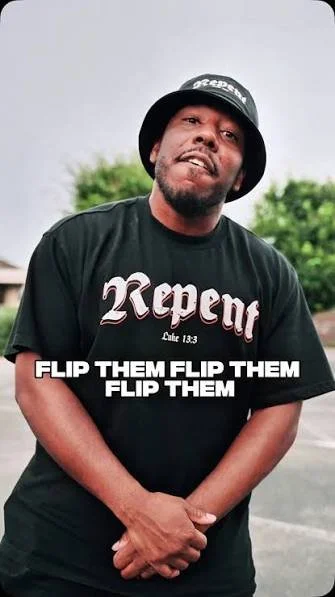
Flip Some Tables- Bryson Gray
Challenging the Establishment
This is where the outlaw comparison earns its keep. Jesus didn't quietly disagree with the people in power — he confronted them publicly, on their own turf.
"Woe to you, teachers of the law and Pharisees, you hypocrites" (Matthew 23:13). He respected people; he did not worship status. He crossed every social boundary of his day — ate with tax collectors, touched lepers, spoke openly with Samaritans, let women fund and travel with his ministry (Luke 8:1–3). "I have not come to call the righteous, but sinners" (Mark 2:17). He wasn't managing his image. He was reaching people.
Then there's the temple. He drove out the merchants, flipped the tables, disrupted the marketplace that had taken over his father's house: "My house will be called a house of prayer, but you are making it a den of robbers" (Matthew 21:13, John 2:15). And according to Mark's account, when the money changers set up shop again the next day, he came back and did it again. Persistence, even when you're the one being persistent about doing what's right.
He healed on the Sabbath despite pushback, asking plainly, "Is it lawful to do good or to do evil… to save life or to kill?" (Mark 3:4). He wasn't saying the law didn't matter. He was saying they'd missed the point of it — that mercy outranks rigid rule-keeping every time.

“I am Vengeance, I am the Knight, I am Batman”
Standing on Business — and Knowing When to Stay Silent
"Do not seek revenge… for it is written: 'Vengeance is mine, I will repay,' says the Lord" (Romans 12:19). Standing on business isn't always loud. Sometimes it's refusing to lower yourself to someone else's level — trusting that justice is coming even when you don't personally deliver it.
When Jesus stood trial, false accusations flew at him from every direction. He said nothing. Pilate was reportedly stunned by it (Mark 15:4–5, Matthew 27:12–14). Isaiah had prophesied it centuries earlier: "He was led like a lamb to the slaughter, and as a sheep before its shearers is silent, so he did not open his mouth" (Isaiah 53:7).
There's a real psychological difference between silence born of fear and silence born of self-control. One is retreat. The other is a decision. Strategic silence is the discipline of letting the initial wave of provocation pass before responding — or choosing not to respond at all. It's harder than fighting back, because fighting back feels good in the moment, and silence doesn't feel like anything until you look back and realize you never handed anyone the ammunition they were fishing for.
Control: Event Plus Response Equals Outcome
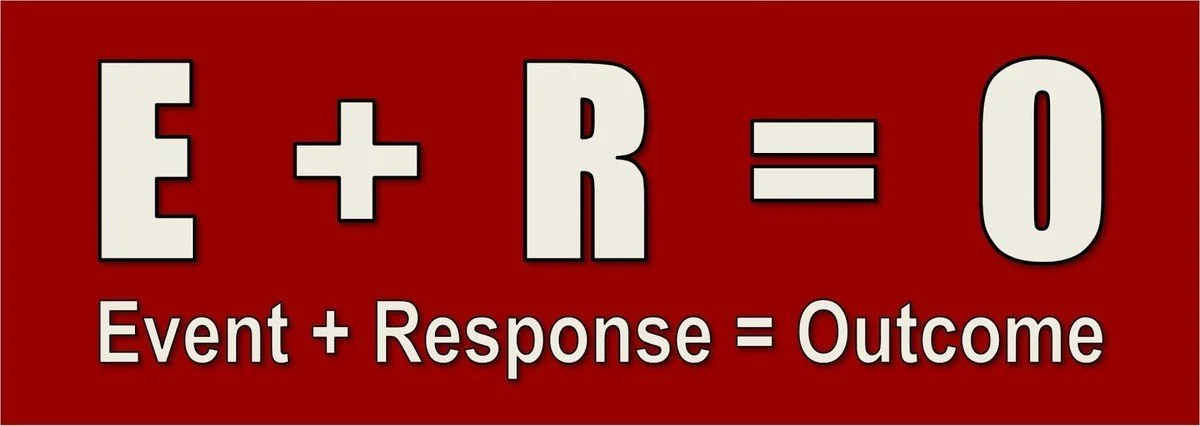
Pretty Self Explanatory. I could’ve used Control- Tori Kelly
A piece of old Stoic philosophy sums up the framework well: event + response = outcome. You can't control what happens to you — only how you respond to it, and your response is exactly what determines where you land.
Jesus chose the hardest version of this equation available to him. The event: betrayal, a false trial, torture, execution. His response: putting others first the entire way through — even praying for the people crucifying him, even offering paradise to the criminal dying beside him. The outcome: resurrection. He proved the hardest version of the game is still winnable if the response is right.
The one moment we consistently see him angry — the temple — is worth noting for what it isn't. There's a real difference between reactive anger, which is about losing control, and targeted anger — what psychologists sometimes call moral outrage — which signals that your values are being violated. "In your anger do not sin" (Ephesians 4:26). Anger itself isn't the problem. What you do with it is.
Oops I used the wrong Outlaws.
Treated Like an Outlaw
Jesus was arrested, mocked, condemned, and crucified between two criminals (Mark 15:27) — a detail Isaiah had predicted 700 years earlier: "He was numbered with the transgressors" (Isaiah 53:12). The irony is heavy: he was condemned by the very systems he'd spent his ministry challenging, because his growing following had become a genuine threat to their control.
But he wasn't a helpless victim of the situation. "No one takes it from me, but I lay it down of my own accord" (John 10:18). He walked into the cross willingly, as part of the mission — not as a defeat that happened to him.

The Realist Gangsta
What Actually Separates Him From a Gangster
Here's the line that matters most:
The world's gangster builds his own empire, uses fear — sometimes violence — protects his own interests, demands loyalty, seeks power, and may exploit the people under him.
Jesus built God's kingdom, used love and truth instead of fear, protected the vulnerable instead of exploiting them, served people instead of demanding they serve him, refused corruption, refused intimidation, and never abandoned the mission. Instead of asking people to die for him, he died for them.
The world's gangster asks, "What will you do for me?" Jesus asked, "What can I do for you?" That's the entire difference — and it's exactly why the comparison only holds up if you're honest about where it breaks down. He was an outsider to the world's systems without ever becoming an outsider to God's will. Treated like an outlaw, without ever having broken the law that actually mattered.
Hustle that never quit. Loyalty that stayed even after betrayal. Respect that never needed fear to back it up. He challenged the establishment without becoming corrupt himself, stood on business without needing revenge, went silent when silence was the strongest move on the board, and stayed in control of himself even while the world around him was on fire.
He was treated exactly like the outlaws he never was. And when the system finally came for him, he didn't run.
He chose the cross.
Now that's gangster.
Scripture references: Matthew 5:17, 9:10–13, 9:12, 21:13, 23:13, 26:50, 27:12–14; Mark 2:17, 3:4, 11:15–17, 15:4–5, 15:27; Luke 8:1–3, 13:32, 15:4; John 1:46, 2:13–17, 9:4, 10:18, 11:48, 15:13, 18:36, 19:11, 19:19, 21:15–17; Romans 12:19; Ephesians 4:26; Isaiah 53:7, 53:12; 1 Peter 2:23; Proverbs 17:17, 17:28–29, 29:11, 29:20; 1 Corinthians 13:7.
