

Why Your Phone Is Ruining Your Self-Esteem: Privacy, Dating Apps & Mental Health Exposed
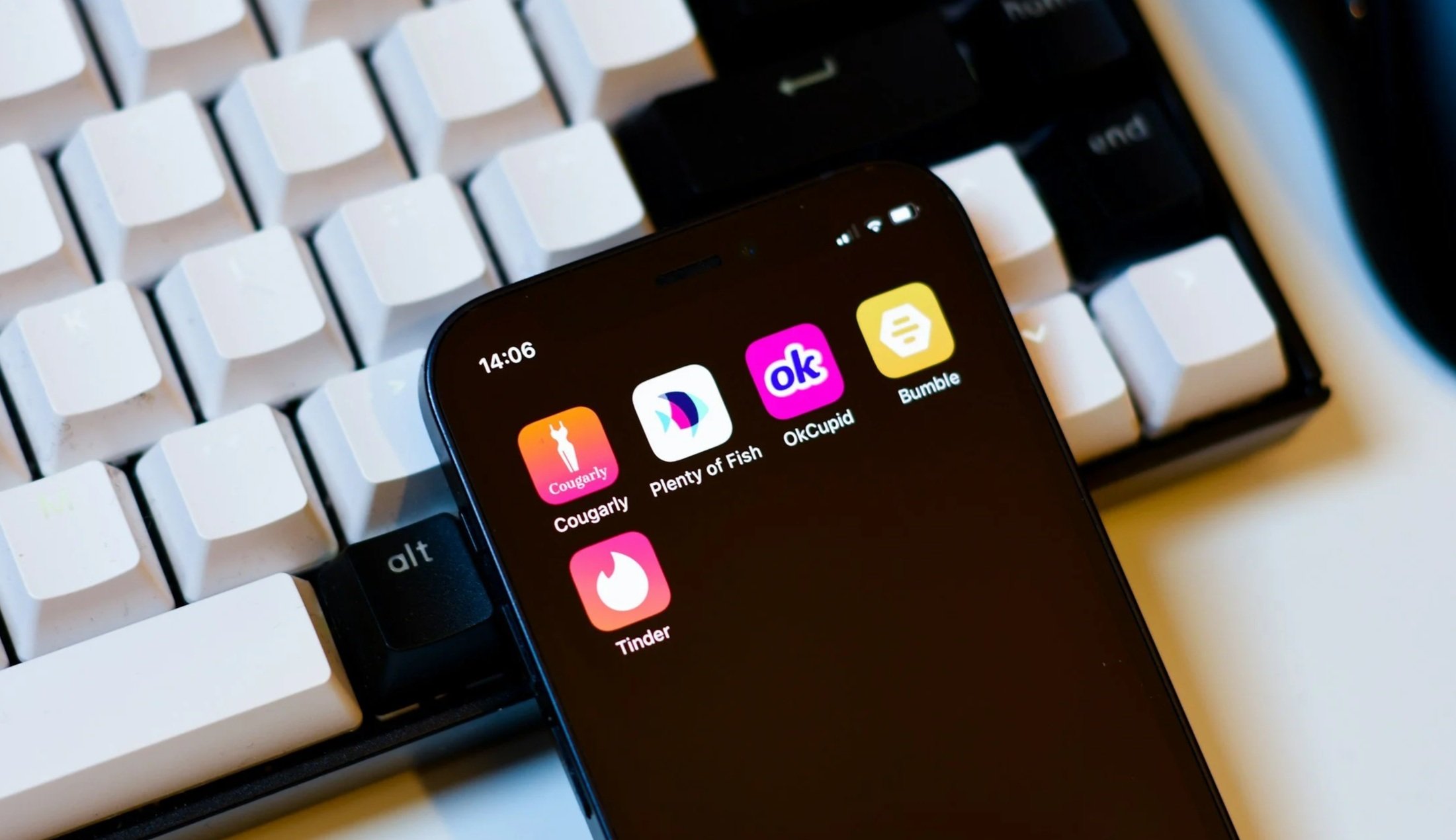
PICTURE OF DATING APPS
Welcome back to another deep dive into the real issues shaping your life—not the fake, boring stuff that everybody wants you distracted with. Today, we're tackling something most people never even think about: the hidden connection between your privacy, your self-esteem, and the technology you use every single day.
With AI advancements accelerating, companies like Google, Snapchat, Instagram, and Facebook can now use your pictures, videos, and text for AI training. It's everywhere, and it's affecting you in ways you might not realize. From dating apps to smart devices to the algorithms tracking your every move, your sense of self is more vulnerable than ever.
Here's what's wild: these aren't separate problems. They feed into each other, creating a cycle that's hard to escape. Let's break it down.
The Privacy Problem Nobody Sees Coming
We live in a smart world—smart speakers, smart TVs, smart doorbells, smart thermostats, and smart dating apps. But here's the uncomfortable truth: the smarter the device, the dumber your privacy becomes.
This isn't paranoia—it's proven science. Researchers at IMDA Networks, Northeastern University, and NYU have documented how smart home devices inadvertently leak privacy information through local network protocols. We're talking about:
Your physical address
Unique device identifiers
Your daily routines
Your sleeping patterns
What other devices are connected to your home Wi-Fi
In one comprehensive study, researchers tested 16 common smart home devices and found 54 security vulnerabilities that exposed users to potential attacks. These devices use microphones, light sensors, accelerometers, and Wi-Fi scanning to compile detailed profiles of who you are and what you do.
Here's something even creepier: you can actually hijack a router and send out a signal that works like sonar readings—kind of like in Batman where his eyes go white, and he can see through walls. With the right technology, someone can pinpoint you in a room in your house using just your router. It's kind of cool, but also kind of terrifying.
Dating Apps: The Ultimate Privacy Nightmare
Here's where it gets really disturbing. Dating apps collect even more sensitive data than your smart home:
Your exact GPS location in real time
Your face through photos and facial recognition (which can be used to create AI-generated content without your consent)
Your deepest desires and preferences
Your conversations and emotional patterns
Your swipe behavior and decision-making patterns
Your sexual orientation and relationship status
According to the Mozilla Foundation's 2024 research, 80% of dating apps can share or sell your personal information for advertising. Think about that—your most intimate information is being sold to the highest bidder.
Security researchers discovered that apps like Tinder request the highest number of dangerous permissions. KU Leuven researchers found that six major dating apps leaked precise location data, meaning someone could track down your almost exact real-world position.
When you combine smart devices in your home with dating apps on your phone, you've created the perfect storm of exposure.
What Is Data Mining and Why Should You Care?
Data mining
Data mining is the process of discovering patterns, anomalies, and correlations in large data sets to extract meaningful insights for decision-making, prediction, and problem-solving. It uses techniques from machine learning, statistics, and database systems to transform raw data into actionable information, which can help companies increase revenue, reduce costs, and improve customer relations.
In practice, this means you can search for something once, and suddenly, ads start popping up everywhere for it. You Google something about batteries, and now you're getting battery ads for weeks. You stop by a store, and Google tracks your location history—now you're getting ads for that store and similar businesses.
Google engages in extensive data mining to improve its products and tailor user experiences. This includes collecting:
Search history
Location history (everywhere you go)
Browsing behavior
App usage patterns
The good news? You can manage how Google uses your information by adjusting your ad settings and reviewing your activity through Google privacy controls. These tools allow you to customize what data is collected and how it's applied, giving you more control over your online experience.
The Mental Health Crisis Nobody's Talking About
Privacy isn't just a tech issue—it's a mental health issue.
Every piece of data collected about you becomes a mirror, but it's a distorted one that doesn't reflect who you really are. When your life becomes something to be measured, tracked, predicted, and sold, your mind starts to internalize that commodification.
Studies consistently show that people who feel watched—even subconsciously—experience:
More anxiety
Increased self-criticism
Lower confidence
Heightened social comparison
Deeper insecurity
Dating Apps Are Destroying Self-Esteem
Look at what the science actually shows—this goes way beyond simple rejection. The mental health impact is severe.
A cross-sectional study published in BMC found that swipe-based dating app users have significantly higher rates of psychological distress, anxiety, and depression. In fact, users were 2.51 times more likely to experience psychological distress compared to non-users.
Researchers consistently show that Tinder users report lower self-esteem than non-users. They feel less attractive, less confident, and less satisfied with their bodies and physical appearance.
A systematic review examining 45 studies between 2016 and 2023 found harmful relationships between dating app use and:
Body image concerns
Mental health deterioration
Overall well-being decline
The Rejection Mechanism Is Neurological
Here's something most people don't know: when you're rejected online—whether it's being ghosted or not getting a match—your brain processes it the same way it processes physical pain.
Research from ADT Healthcare confirms that every unmatched swipe or ghosting incident triggers the same neural response as physical injury.
Studies show that roughly 20% of young adults report being ghosted, and over 30% report "breadcrumbing"—that pattern of sporadic, minimal communication that keeps you hanging on without commitment. These repeated micro-rejections erode self-esteem and foster deep feelings of rejection and unworthiness.
Privacy Violations Make It Worse
While all this psychological damage is happening, these same apps are treating your most intimate information as a commodity. Major data breaches have exposed millions:
Ashley Madison leaked 37 million users' data in 2015
MeetMindful exposed 2.3 million users' information in 2021
And these are just the breaches we know about.
Research from advocacy groups highlights that LGBTQ+ adults and younger users—the populations who use these apps at the highest rates—also face disproportionate harm when privacy breaches occur because their data can be weaponized against them.
Ask yourself: How can you feel secure in yourself when even your identity isn't secure?
The Cycle: How Privacy Loss and Low Self-Esteem Reinforce Each Other

The cycle feels like a spiraling staircase
This is the part nobody talks about—the feedback loop that traps people.
When people lose privacy, psychological research shows that they also lose:
A sense of control over their lives
Personal autonomy and agency
Emotional stability
Psychological safety
A healthy relationship with themselves
Here's how the cycle works:
Step 1: Smart devices and apps collect everything—location, behavior, preferences, mistakes, vulnerabilities.
Step 2: You become hyper-aware of being watched. You start altering your behavior. You curate yourself. You second-guess your authenticity.
Step 3: Dating apps amplify insecurity. Your worth becomes tied to external validation—swipes, matches, response rates.
Step 4: Privacy breaches or awareness of surveillance can collapse self-esteem. You realize strangers, companies, and algorithms have access to your most vulnerable data.
Step 5: You cope by using the apps even more. Research shows that individuals characterized by high anxiety, depression, and low self-esteem often use online dating as avoidance or escapism from distress. This creates a negative reinforcement cycle that heightens the chances of developing problematic usage patterns.
Smart devices expose your life. Dating apps expose your heart. And both systems profit from your insecurity—their business model depends on it.
Social Media Isn't Helping Either
Social media can strongly impact self-esteem through several interconnected factors:
Constant social comparison, especially with highly curated and AI-edited images, creates unrealistic beauty and lifestyle standards
Fear of Missing Out (FOMO): seeing others' seemingly more exciting lives lowers confidence and satisfaction
Cyberbullying adds another layer of harm, with online harassment directly damaging self-worth, especially among young people
The pressure to maintain a perfect online persona, combined with AI-enhanced images, reinforces unattainable expectations
Over time, excessive use of social platforms has been linked to anxiety, depression, and other mental health concerns.
The Positive Side (Yes, There Is One)
While technology and social media can negatively affect self-esteem, they also offer some positive benefits:
Online spaces can create a sense of belonging by helping people connect with like-minded communities
Support networks allow users to share experiences and receive encouragement, especially for those who may feel isolated
Some people communicate better through text than in person
Still, the overall impact tends to be negative. Research consistently shows that exposure to unrealistic images, social comparison, pressure to maintain a perfect persona, and excessive screen time all contribute to lower self-worth.
What You Can Do About It
1. Awareness Is the Foundation
Understanding how these systems work is the first step to reclaiming control. If you're aware that you're getting too attached to someone based on a profile picture, that's a sign to step back. Be smart about your emotions and recognize when apps are manipulating you.
2. Protect Your Privacy Practically
Review app permissions regularly and revoke unnecessary access
Shut off AI generative features (Snapchat, Instagram, Gmail, and others use your data for AI training)
Be aware that Windows 11's Copilot takes screenshots every 5-10 seconds of your screen
Check your privacy settings after every app update—companies often override your preferences
Use privacy-focused alternatives when possible
Be strategic about what personal information you share
Consider which smart devices you really need versus ones that just create vulnerability
3. Protect Your Mental Health
Set time limits on dating apps—if you have the free version, use the built-in swipe limits to your advantage
Take breaks when you notice your self-esteem declining
Remember that rejection on an app has nothing to do with your inherent worth
Seek connection in multiple ways, not just through apps—go to coffee shops, clubs, community events
Consider whether the app is serving you or if you're serving the app
4. Recognize the Manipulation
These platforms are engineered to keep you insecure and coming back. The infinite scroll, the gamification, the variable reward schedule—it's all designed to exploit your psychology. When you recognize it, you can start to resist it.
The Bottom Line
We live in a world that is always watching us, always judging us, always comparing us to everyone else. If you don't actively protect your privacy and your self-worth, you're not just losing data—you're losing pieces of yourself.
You deserve to live a life that isn't constantly measured. A life where your worth isn't tied to swipes. A life where your identity is more than what an algorithm decides you are.
Your privacy is power. And when you protect it, your self-esteem grows naturally—because confidence comes from control, and control starts with awareness.
Stay wise, stay fruitful, stay safe.
